

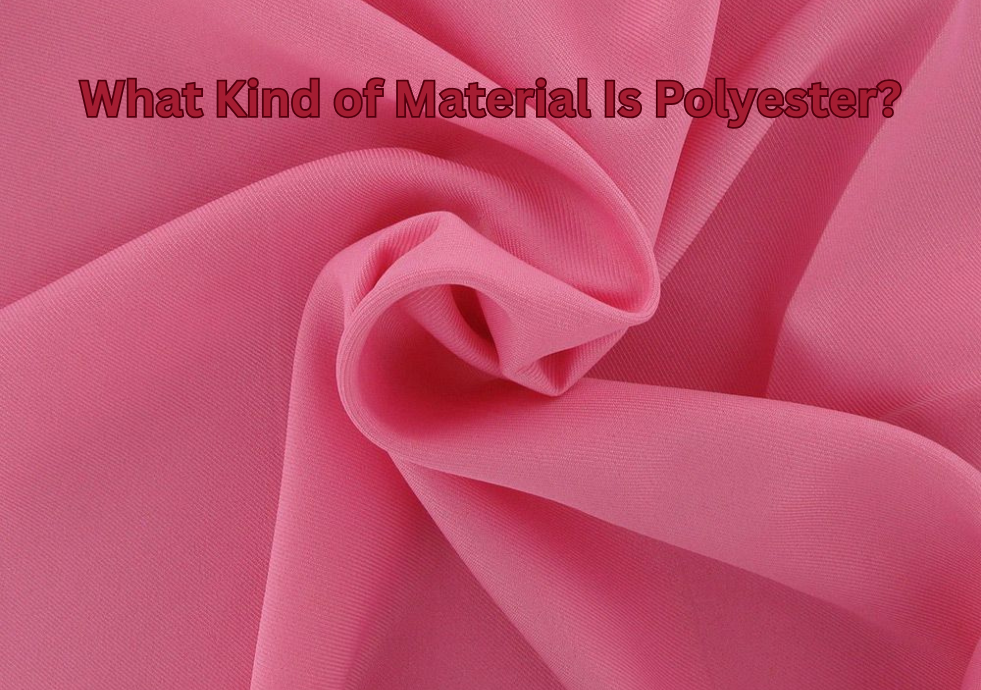
Many people wonder, what kind of material is polyester? It is a standard inquiry because polyester can be found in all types of clothing and furniture as well as in bottles and packaging. In simple terms, polyester is a man-made polymer, normally consisting of polyethylene terephthalate (PET) which is strong, long-lasting and does not wrinkle or shrink.
Knowing the type of material polyester will enable you to make more informed decisions regarding the care of fabrics, the comfort, and sustainability. What type of material is polyester then, and why is it so popular? Now it is time to dive into nature, major properties, common uses, and its comparison with other popular materials.
Definition & Chemical Nature
Polyester is a type of polymer where repeating units of the monomers are connected by ester bonds (–CO–O–). Polyethylene terephthalate (PET) is the most popular type, which is produced as a result of the reaction of terephthalic acid with ethylene glycol.
Polyester is a synthetic material, therefore it is not naturally formed by the chemical process of polycondensation or transesterification, as a lot of natural polymers are.
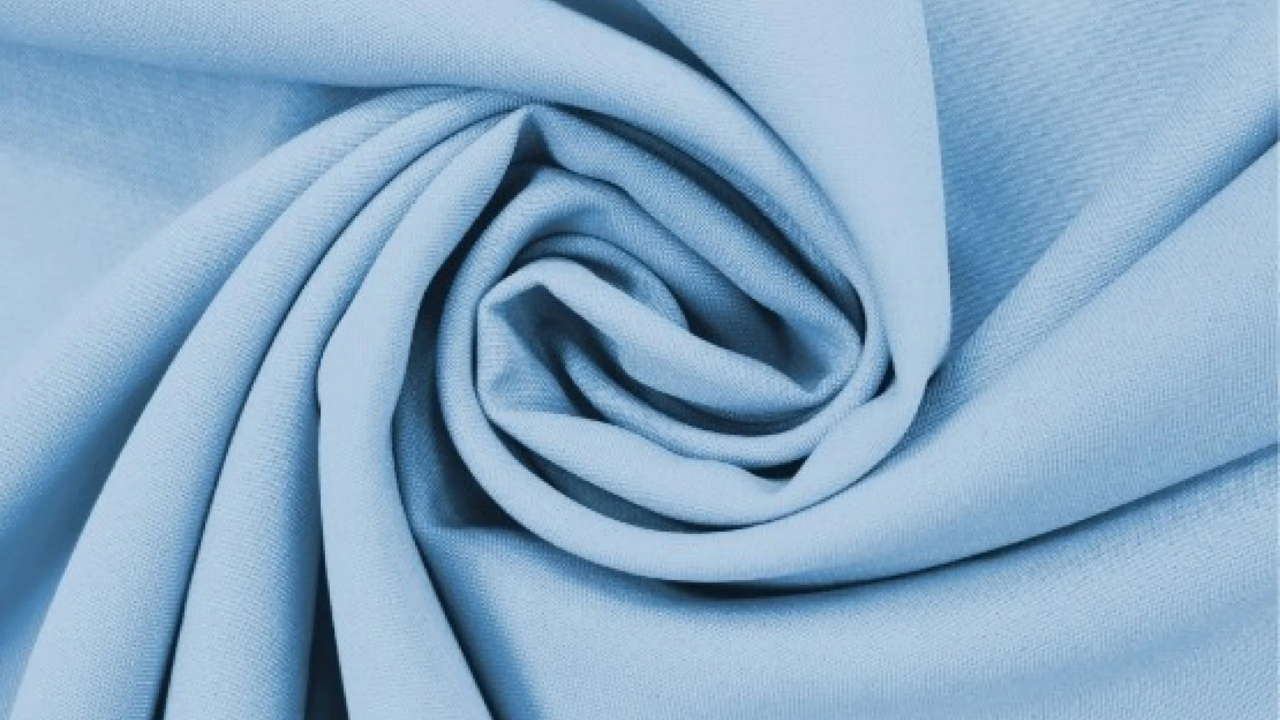
The polyester family has other types other than PET such as polybutylene terephthalate (PBT) that are more flexible and have lower melting point. Other types are copolyesters and engineering or biodegradable specific polyesters.
Physical & Mechanical Properties
Polyester is tough and robust. It is very strong in tensile properties (both dry and wet are close) and thus cannot be stretched and torn during regular usage. It has great abrasion resistance second only to nylon of the common synthetic fibers.
It exhibits good dimensional stability. Polyester does not shrink and has good shape retention characteristics – the fabrics do not change after laundry or heat-setting. Polyester is highly resistant to wrinkles because it is able to recover its elasticity.
Polystyrene is hydrophobic and thus absorbs little moisture (moisture regain ~0.4-0.8 %) and can be dried easily.
It becomes soft at about 230-240 °C, melts at about 255-265 °C and decomposes at even higher temperatures. Lying in excess heat it may deform or melt.
Polyester is chemically resistant to many acids and weak alkalis but strong alkali or high temperature can lead to hydrolytic and degradation.
Low breathability and low moisture absorption, can melt, or be damaged in high temperatures, and degrades slowly in high UV are some of the weaknesses.
How Polyester Is Made
So, what kind of material is polyester and how is it made? On the chemical level, it is formed by reacting ethylene glycol (a di-alcohol) and terephthalic acid (a di-acid) with each other to form ester bonds, and water is released in a condensation (or polycondensation) reaction.
Practically, the manufacturers typically begin with dimethyl terephthalate (DMT) reactive with ethylene glycol through transesterification to form initial oligomers that are further polymerized under heat and low pressure to form high-molecular-weight PET.
The polymer is melted and forced out and allowed to cool into chips or pellets. These pellets are melted once more in order to produce fibers or films which are spun with the use of spinnerets or pulled into fine sheets.
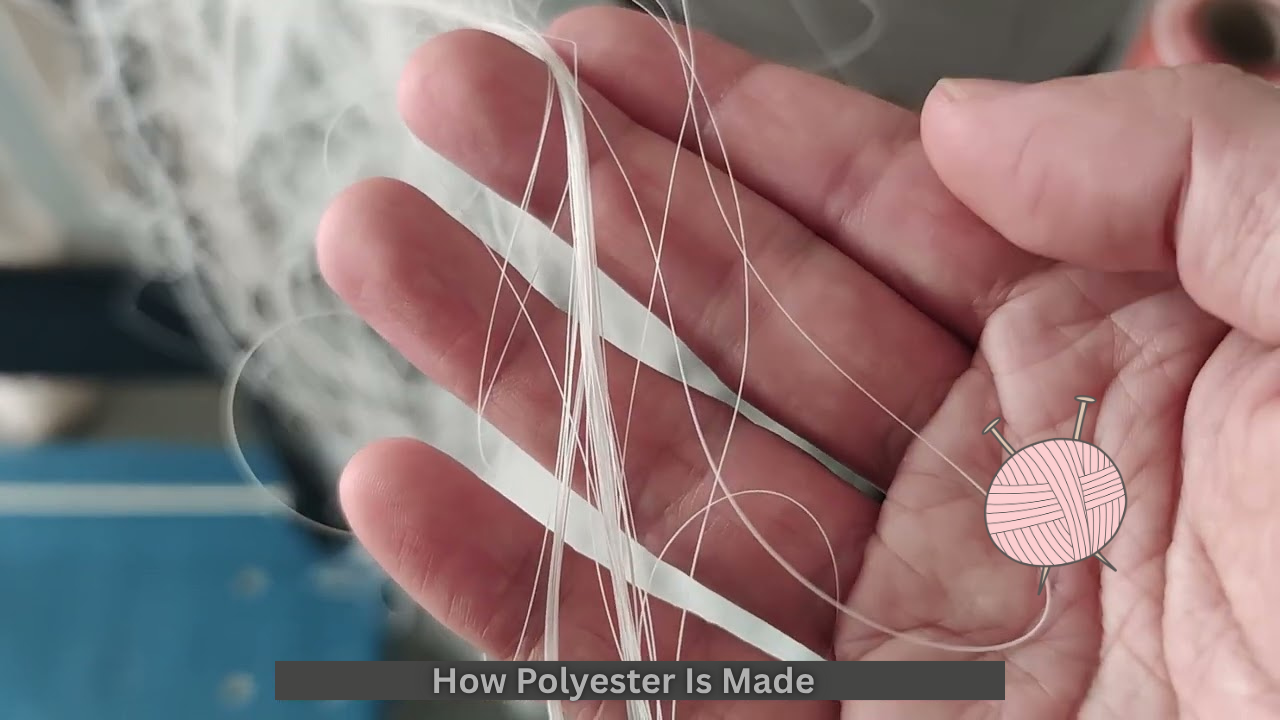
Outside virgin PET, there are variations and alterations, blended polyesters (combined with other fibers), surface finishes, and recycled polyester (PET) in which used bottles of PET or fabric waste are washed, melted, depolymerized, and remodeled.
Common Uses & Applications
The application of polyester is very extensive. It permeates textiles: in clothes such as shirts, jackets, sportswear, in home furnishings such as bed sheets, curtains, upholstery, carpets; often combined with cotton (polycotton) to provide a balance between comfort and durability.
Polyester is also employed industrially in the manufacture of bottles and containers (particularly PET bottles), films (packaging films, Mylar, insulating films), reinforcement in conveyor belts, safety belts, ropes and composites. It is also used in electrical insulation, filters and in coating uses.
Polyester also has specialty forms; high-temperature polyesters and liquid-crystal polyesters that are used in high-performance applications – aerospace, engine parts (seals, abradable components), technical fabrics or where dimensional stability in the presence of heat is required.
Read Also: Software with Volt 476: Setup, Performance, and Best Choices
Advantages vs Disadvantages
Advantages
Strength and Durability: Polyester is hard. It is not easily stretchable, tearable and abrasive thus, objects are likely to be durable.
Cost-Efficiency: It is a synthetic fiber, therefore, it is cheaper to make than most natural fibers; it typically translates to lower prices on the consumer side.
Easy Care: It maintains its shape, does not wrinkle, does not shrink much, dries quickly and in most cases machine washable.
Chemical/Environmental: Polyester is resistant to numerous chemicals (acids, alkalis) and is resistant to mildew, molds and insect damage. It is also resistant to light fading and retention of dyes.
Disadvantages
Environmental Impact Polyester is produced using fossil fuels, is non-biodegradable, and during washing, microplastics are released into waterways.
Lack of Breathability and Moisture Retention: It is not very good at absorbing moisture and can be unpleasant to wear in hot and humid weather.
Melting / Heat Sensitivity: Polyester is heat resistant, but melts at lower temperatures and may deform in high temperatures (e.g. hot iron, open flame).
UV Degradation & Static: With time, fibers can be degraded by UV. There are also pilling and the problem of static electricity.
Innovations & Mitigations
Recycled Polyester (rPET): Polyester can be manufactured using waste bottles or cloths after consumption by consumers to lessen the environmental footprint.
Alternatives based on bio-polymers: There are studies on bio-polyesters or partially bio-derived feeds in order to reduce reliance on fossil fuels.
Fabric Engineering: Polyester can be mixed with natural fabrics (e.g. cotton), have breathable finishes or UV protection to mitigate the negatives.
Final Word
So, what kind of material is polyester? It is a synthetic polymer and it is primarily composed of polyethylene terephthalate (PET) which is strong, durable and versatile. Polyester can be found in clothes and domestic fabrics, bottles, and films. Although it is easy to care about and less expensive, it is also questionable in terms of breathability and environmental friendliness. The knowledge of the type of material polyester will assist you in making smarter and more sustainable decisions. Learn about such similar issues as recycled polyester and its place in contemporary fashion.
Read More: Nylon vs Polyester Fabric Showdown: Which Is Right for You?
